Internationally acclaimed artist transforms our Gateshead charity shop
Our Gateshead shop received a huge glow-up last week. This is thanks to a striking 95ft long mural created by
Read MoreHospice
Fundraising
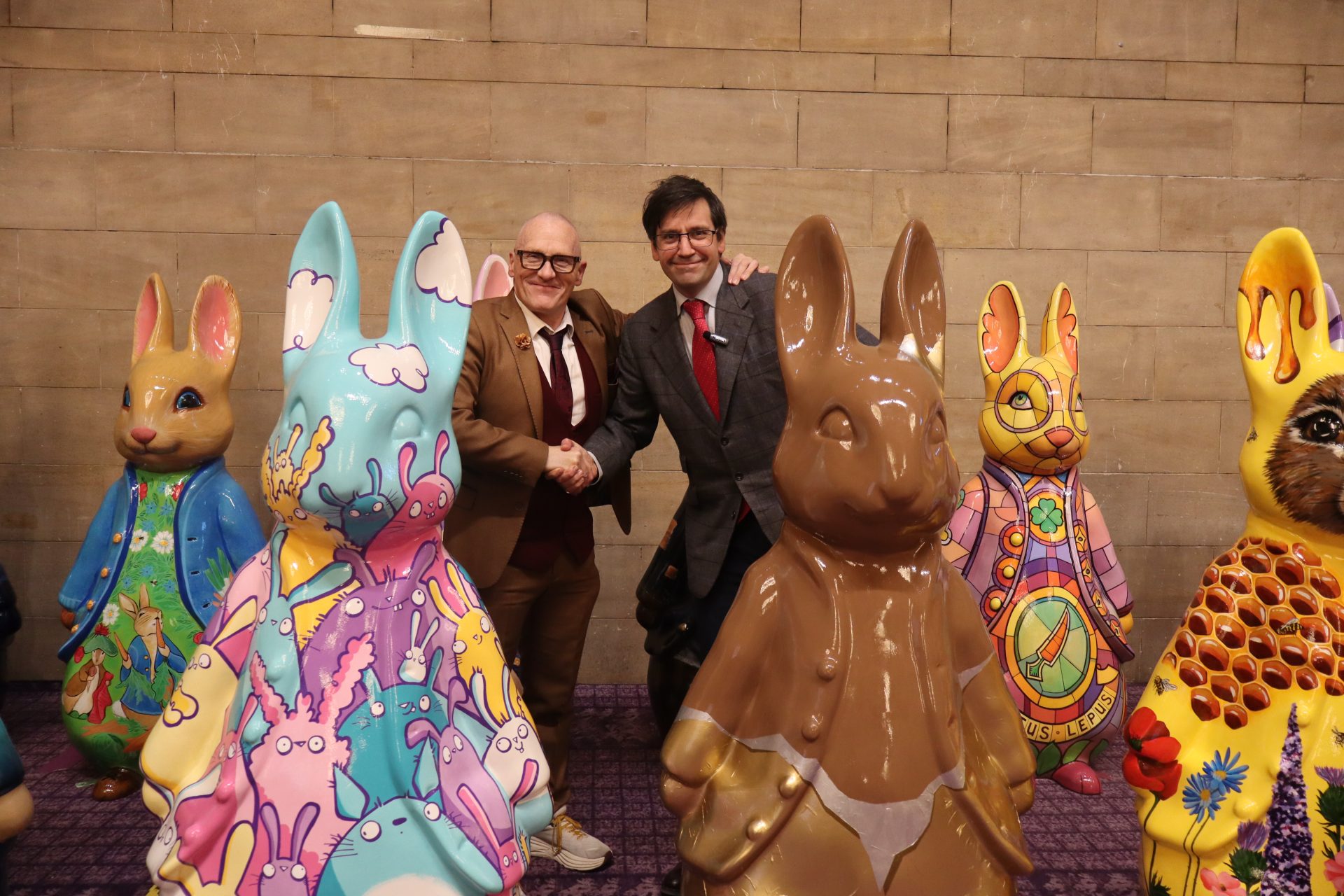
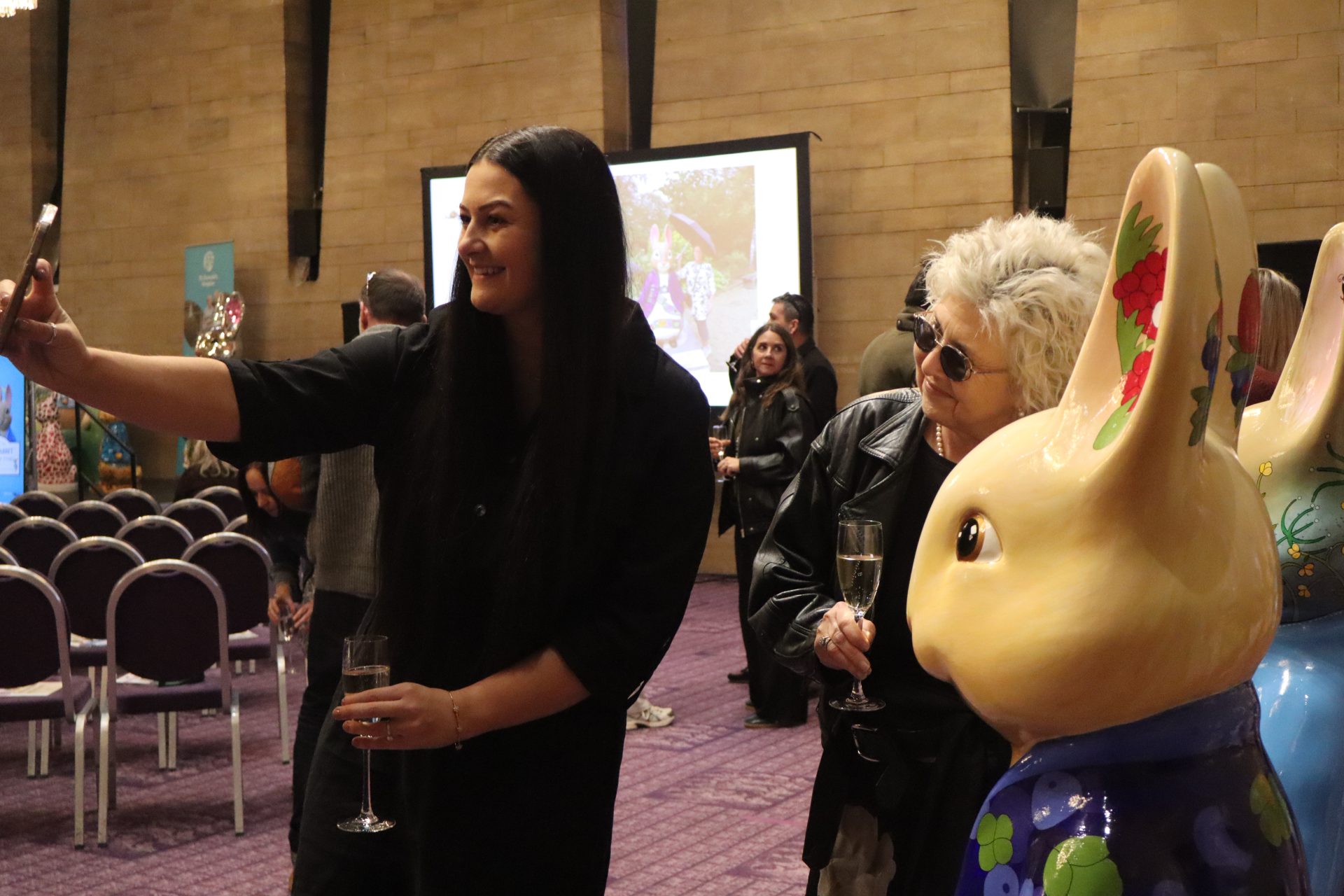
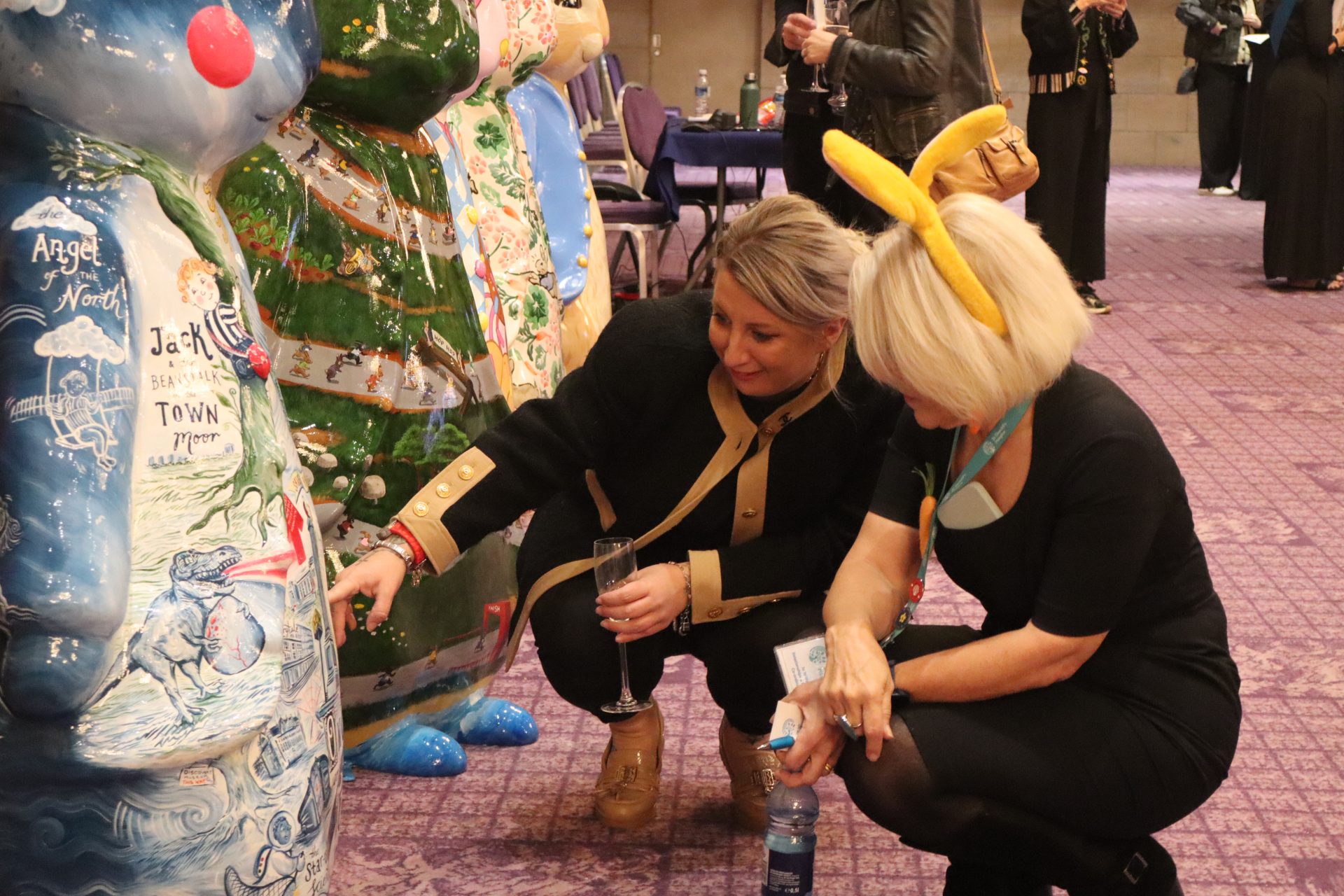
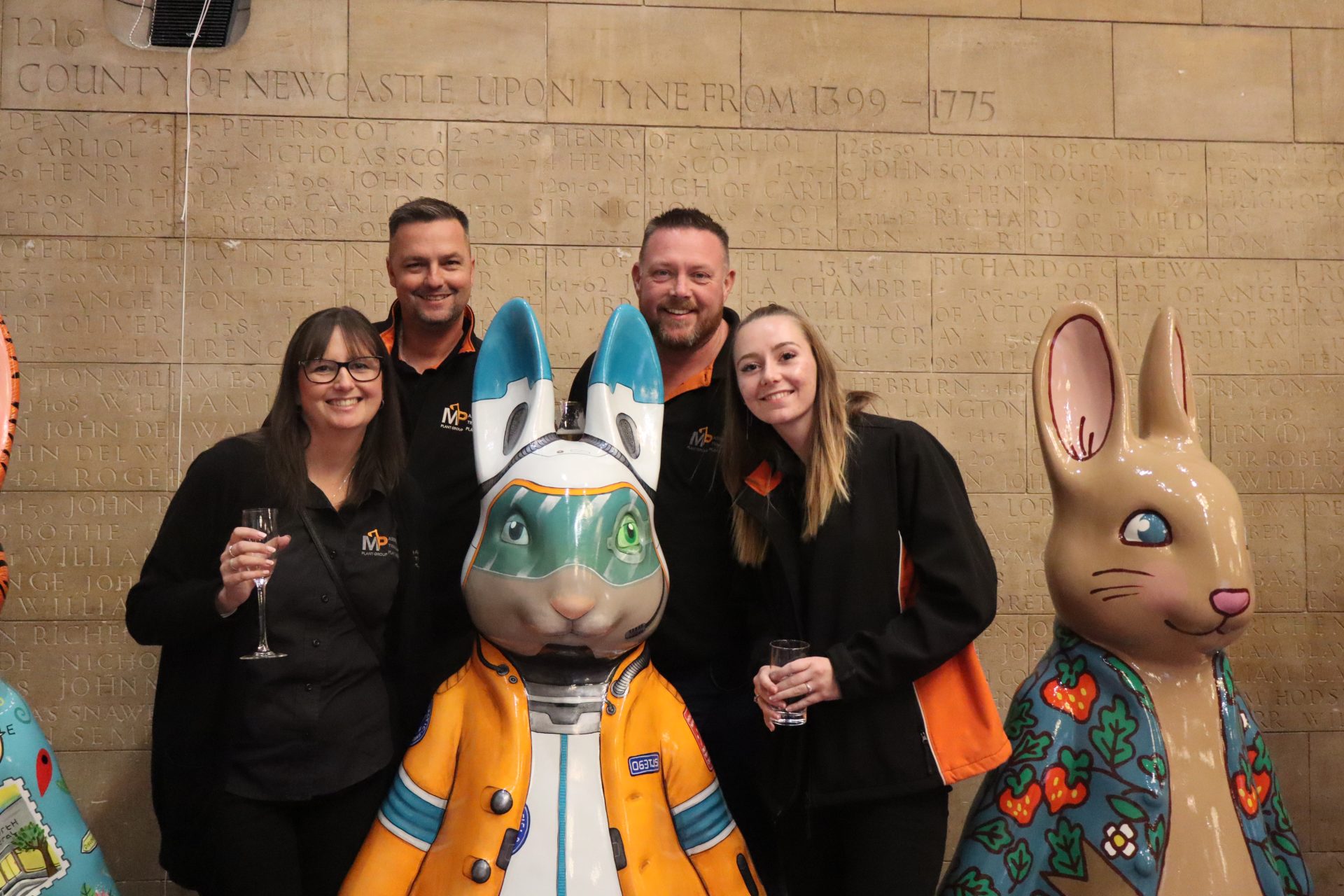
Supporters gathered both in person and online at Newcastle Civic Centre on Tuesday 13th October, eager to take home their very own Peter Rabbit™-inspired sculpture and bring the art trail to a spectacular close. And what a finale it proved to be.
Following a hugely successful Farewell Weekend, which welcomed almost 3,000 visitors to say goodbye to the fluffle, 34 uniquely designed Peter Rabbit™ sculptures from the summer trail across Newcastle and North Tyneside went under the hammer. A further six exclusive lots were also available, including five smaller Peter Rabbit™ sculptures and a special Snowdog created exclusively for auction night. The Snowdog held particular significance, marking ten years since St Oswald’s Hospice launched its first ever art trail, Great North Snowdogs in 2016.
Opening the evening, Steph Edusei, Chief Executive of St Oswald’s Hospice, said:
“I have been amazed by the dedication, creativity and hard work that has gone into bringing this trail to life, both behind the scenes and throughout the summer. Seeing the excitement and enthusiasm from communities across the region has been truly special.
The response from the public has been overwhelming, and this auction has provided a fitting finale to an unforgettable summer as we celebrate 40 years of care at St Oswald’s Hospice.”
Steph also thanked the organisations that helped make the trail possible.
“Our sincere thanks go to our headline sponsor, Newcastle City Council, for their incredible support and generosity in making the Civic Centre available for both our Farewell Weekend and this evening’s auction.
I’d also like to thank North Tyneside Council for their continued support and Northumbrian Water, our Learning Programme Sponsor, whose contribution enabled hundreds of school children across the region to adopt and decorate their own sculptures and engage with the trail.
Our Community Partner, NorthStandard, has also enabled some of the sculptures to remain with the communities that created them, meaning we may well see some familiar faces appearing across the city again in the future.”
Before bidding began, host Alfie Joey welcomed Charlie Langhorne, Co-Founder and Managing Director of Wild in Art, to the stage. As the creative producers behind the trail, Wild in Art has worked alongside St Oswald’s Hospice for a decade, beginning with the hugely successful Great North Snowdogs trail.
Reminding everyone of the vital hospice care and support that the trail helps fund.
The excitement quickly built as auctioneer Fred Wyrley-Birch of Newcastle-based auction house Anderson & Garland introduced the first of the evening’s 40 lots.
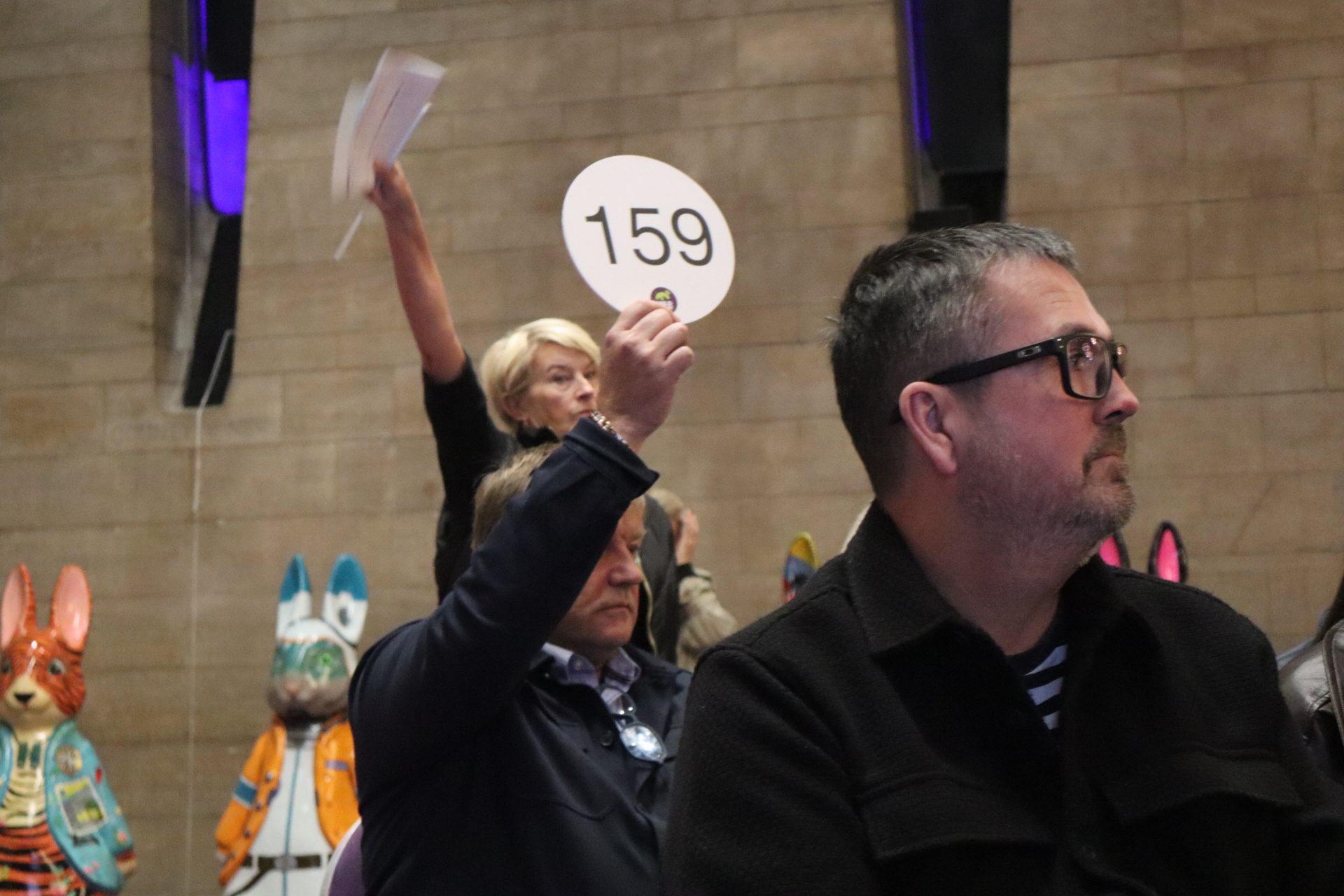
Competition was fierce throughout the night, with determined bidders battling to secure their favourites.
Lot 3, Hoppy Days, proved every bit as popular in the auction room as it had been on the trail. Painted by Lorraine Hall and sponsored by Sopra Steria, the sculpture sparked a lively bidding war before the hammer finally fell at an impressive £10,000, prompting the first big round of applause of the evening.
Another fiercely contested lot was Peter Rabbit and Friends by Amanda Quellin. Following a tense exchange between bidders, the final price climbed to a remarkable £11,600.
As expected, the classic Peter Rabbit™, painted by Jodie Silverman, attracted significant interest. Several bidders competed to secure Lot 36, a beautiful interpretation of Beatrix Potter’s iconic character, with the sculpture eventually selling for a huge £21,000.
But the undisputed highlight of the evening was Lot 25, A Love Letter to the British Countryside. The only book bench sculpture in the auction, it was painted by Jina Gelder to commemorate the 160th anniversary of Beatrix Potter’s birth and featured stunning hand-painted depictions of her much-loved characters.
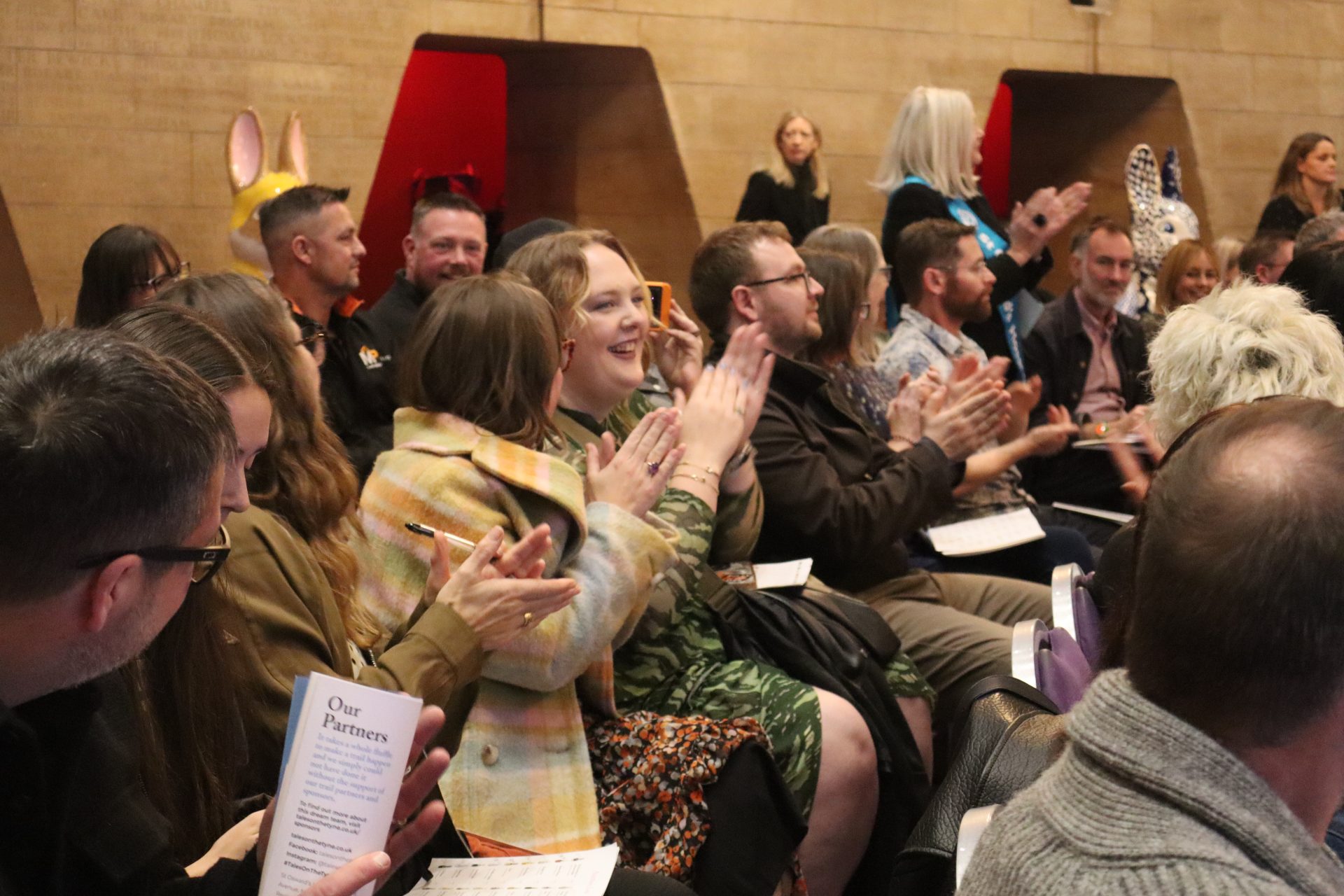
What followed was a truly unforgettable bidding battle. Two determined bidders in the room went head-to-head before being joined by a third bidder online. Guests watched in amazement as the price climbed ever higher, with none of the bidders willing to back down. The atmosphere was electric, filled with anticipation and disbelief as the total continued to rise. When the hammer finally came down at an extraordinary £52,500, the room erupted into applause and cheers. Not only was it the highest price achieved on the night, but it also set a new record as the highest amount ever paid for a sculpture across all four of St Oswald’s Hospice’s art trail auctions.
The excitement continued throughout the evening and, when the final hammer fell on Ruby Rabbit by Natalie Ratcliffe at £10,000, the auction total stood at an incredible £294,500.
Yet the night wasn’t quite over.
With the fundraising total tantalisingly close to the £300,000 milestone, Charlie Langhorne returned to the stage and invited guests both in the room and online to help bridge the gap. One by one, hands were raised and donations pledged. As the total edged ever closer, Charlie himself contributed the final amount needed, taking the grand total to a phenomenal £300,000.
“I am absolutely delighted that we’ve achieved this fantastic result – the highest ever raised at one of our art trail auctions. Our Peter Rabbits have been loved and enjoyed by so many people, and the positive impact of the trail on both the Hospice and our local communities will be felt for years to come. This was such an exciting and fitting end to a wonderful trail.
I am immensely proud of everyone who has worked so tirelessly and enthusiastically to deliver Peter Rabbit™: Tales on the Tyne and create such a memorable experience for the region. A huge thank you to all of our brilliant bidders and everyone who made a donation on the night.”
Special thanks go to host Alfie Joey, auctioneer Fred Wyrley-Birch and the team at Anderson & Garland, Newcastle City Council and Newcastle Civic Centre for hosting the event, Big Purple Event Production, Greggs for keeping guests fuelled throughout the evening, and Quicksilver Moving & Storage, whose team ensured every sculpture was safely packed and ready to begin its journey to a new home.
And finally, thank you to the artists, sponsors, partners, volunteers and everyone who placed a bid. Most importantly, thank you to the thousands of people who embraced the trail over the summer and helped make it such an outstanding success.
We hope our auction winners enjoy their new furry friends and look forward to seeing our Peter Rabbit sculptures settled happily into their forever homes.
We would love your feedback. Have you found the information helpful on this page?
We’re sorry that you didn’t find this helpful. Please help us improve by filling out the below box.
Thank you for the positive feedback!